
Saturday, May 15, 2010


Hopelessness and Hope in Nablus

Many Palestinian adults express a palpable hopelessness that is heartbreaking. When I asked one successful administrator from An Najah University what he thought about a solution to the conflict, he told me, "There is no solution. There is no future. There is only the present. That's why I won't get married. I don't want my children to live in this." Since I have arrived the city has been in a constant state of reconstruction and improvement, rebuilding damaged buildings and the sprouting of new commerce. When I expressed my amazement to some residents of Nablus about the growth of the city, so soon after hostilities have died down, they said that people are trying to rebuild as quickly as possible before another rise in conflict begins. However, I think of all of the investment in children's programs as hope for the future. The West Bank has a great number of programs just for children and youth, which proves that there is some hope for the future, despite the persistent hopelessness felt by many adults.
Balata Refugee Camp


Today, I visited Balata Refugee camp, which is the largest refugee camp in the West Bank, home to 25,000 refugees, some who have been there since it was created in 1953. With 75% of Balata's refugee population under 18-years-old, there are numerous programs for children and youth.
In Witness in Palestine, Anna Baltzer writes: "Balata sees more violence and incursions than most other places in Palestine, which is evident as you walk through the camp. There are bullet holes in every house, school, and store. The children are tougher than those in other Palestinian communities, and their parents are more suspicious. But the barrier is easily broken with a little Arabic and indication of solidarity" (p.47).
Their resilience is illustrated in the colorful graffitti marking the concrete walls around the camp: "Boycott Israel, Free Palestine," and "Love Palestine, Hate Racism, 1 People, 1 World!" The alleys between the UN-constructed 4-story buildings were tiny – just a few feet across, windows into dark rooms facing each other, so everything said in one house is heard in the next.
Naqba Photo Exhibit in Nablus

 Nablus hosted a photo exhibit to com- memorate 62 years since Al-Naqba, or "The Catastro- phe". After a variety of partition plans, even proposals to transfer the Palestinian Arab population, on November 29, 1947, the UN General Assembly approved a partition plan - Resolution 181. Although Jewish people owned 6.5% of Palestinian land in private or collective property holdings, the Jewish state was awarded 56.5% of the territory of Palestine, and the Arab state was awarded 42.9% in the UN partition plan. Thus began the Arab-Israeli war, which brought independence for Israel and "catastrophe' for Palestinians. At the start of the 1948 war, 940,000 Palestinians lived in what was to become Israel. By the end of the war, 150,000 Palestinians remained in areas under Israeli control. Though israeli prime minister David Ben-Gurion frequently said, "Israel did not expel a single Arab," it is clear that many were forced to leave by Israeli military units.

Friday, May 14, 2010
Al-Naqba Anniversary in Nablus

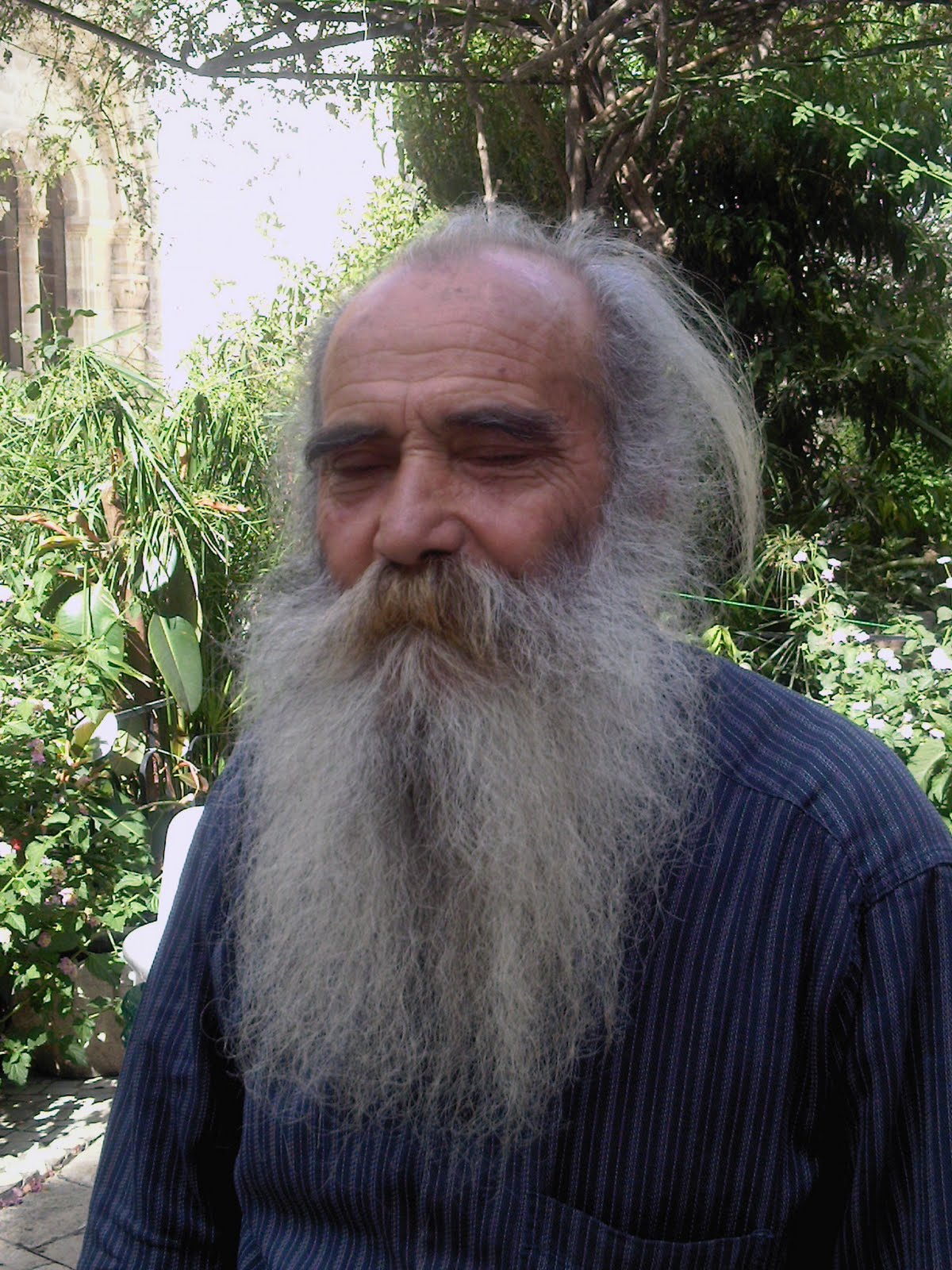
I am now in beautiful Nablus, nestled between Mount Ebal to the north and Mount Gerizim to the south. Today, Friday, is a day of rest, so I spent the day catching up on reading and writing. Walking the empty streets, I notice relics of the city's violent past: some windows punctured with bullets and streets lined with peeling posters of Palestinian martyrs. Contrary to the Western media's depiction, every person killed in the conflict (whether a combatant or a civilian) receives a tribute poster. Nablus was the focus of repeated Israeli incursions during the second Intifada (meaning "shaking off"), when Israeli planes, tanks, and bulldozers targeted the city, killing dozens of civilians and damaging or destroying about 700 buildings. In fact, today is Yom Ha'Atzmaut (Independence Day in Israel) or Al-Naqba ("The Catastrophe" in Palestine), and to remind the city's inhabitants, the Israeli military flew several planes over the city in the morning, breaking the sound barrier. I can see the Israeli army has set up posts in the mountains surrounding the city, and often Palestinians in Nablus will tell me that they always feel as if "we being watched by Israel". During my first evening here, a gentleman sent a plate of fruit to my dinner table and introduced himself as Professor Sa'ed Jamal Abu Hijleh, a Palestinian poet/human geographer/political science professor/radio host/bogger. I don't usually accept fruit from strangers, but I trusted my instincts, and Sa'ed has become a great resource here in Nablus. Despite his exuberant activism, Professor Sa'ed Jamal Abu Hiljeh became extremely emotional when he started to tell me when his mother was killed by Israeli soldiers. In 2002, the 61-year-old grandmother was sitting on her front porch embroidering, when Israeli soldiers opened fire upon them killing her and injuring her husband. There is a memorial website for her here.
Thursday, May 13, 2010
Amman to Nablus via the King Hussein/Allenby Bridge Border Crossing

Amman is only about 200k from Nablus, but, due to the numerous checkpoints and security features installed by Israel, it me took over 9 hours to get here. I catalogued my border crossing, entering Israel from Jordan via the King Hussein/Allenby Bridge border crossing:
- Drive 100K from Amman to Jordan-Israel border (1 hour)
- Taxi drop off on Jordan side of the border
- Walk about 2K (with luggage) to bus depot
- Give luggage to Jordanian official to be X-rayed; retrieve luggage
- Give passport to Israeli official
- Pay 5JD ($7.50); get on bus
- Get passport with Jordanian exit stamp
- Depart on bus; drive about 5K through the Jordan Valley, passing through several military checkpoints (30 minutes)
- Get off bus at Allenby Bridge Crossing; walk past fierce-looking man dressed in jeans and T-shirt, carrying large semi-automatic weapon
- Give luggage and passport to Israeli official
- Wait in line to get passport back
- Wait in line to get passport checked
- Wait in line to get personal belongings X-rayed
- Walk through metal detector
- Wait in line for passport control; answer questions; forfeit passport
- Fill out personal information form; wait in passenger waiting area (2 hours)
- Meet with Israeli official; answer more questions (15 minutes)
- Wait in passenger waiting area (1 hour)
- Meet with Israeli military officer; answer more questions (15 minutes)
- Wait in passenger waiting area (1 hour)
- Get called by Israeli official to retrieve passport; exit passenger waiting area
- Give passport to Israeli official; get another sticker on passport
- Retrieve luggage
- Exit Allenby Bridge Crossing Point
I took a bus from the border to Jericho (the world's oldest continuously inhabited city, settled 10,000 years ago) and then took a shared taxi through Ramallah and onwards to Nablus. The driver, (a surly young man who got into a fight with an elderly passenger and then a Palestinian Authority official), took a circuitous route to avoid the military checkpoints, so the journey took twice as long. But the drive was fascinating. Rising from Jericho into the hills, I could see one of the West Bank's largest and most contentious Israeli settlements, Ma'ale Adumim, which sprawls atop the hills slipping eastwards down from Jerusalem. It achieved official Israeli city status in 1991, and is home to over 30,000 settlers who live there illegally (according to international bodies) on Palestinian land. Palestinians claim that Israel's plan for Ma'ale Adumim's continual expansion is to ensure an 'outer ring' of Israeli settlements that will have the effect of isolating East Jerusalem from Jericho, and eventually the north West Bank form the south, cutting the entire West Bank in half.
 On the short drive to Nablus, I didn't expect to see so many settlements, and I tried to write down as many names as I could (while losing a battle of window roll-up/roll-down with my driver): Rimmonim, Ma'ele Efrayim, Qusra, Migdallim, and Gav Hahar. They rose up like green oases - with maroon-tiled houses in the middle - amidst the hilly desert landscape. There are 187,000 Israeli settlers currently living in more than 100 settlements in the West Bank, with around another 177,000 in Palestinian East Jerusalem. One of the issues that I would like to explore more is the issue of settler violence, as there have been reports of settlers attacking Palestinian children on their way to school and destroying families livelihoods (e.g., farms and olive groves), which obviously has short- and long-term impacts on children and families. In fact, last week, Israeli settlers were accused of burning down a mosque in Luban al Sharqiya, near Nablus.
Monday, May 10, 2010
Street Kids in Amman
 I have arrived in Amman, before heading into the West Bank to begin some preliminary research. When I was touristing around, I sat down under a park bench to relax and regroup. I was instantly seized upon by about 6 young street kids, none of whom spoke English. We tried communicating in mime and using my Lonely Planet glossary. One of them brought me a Pepsi, which became the only word we could communicate to each other. (And wouldn't Pepsi just LOVE that!) When I offered to pay for the Pepsi, they refused the money. I asked (in Arabic) where the Citadel was, and they pointed in the direction of a large hill. I took off, only to feel the presence of someone following me. Hakim and Ibrahim (two of the kids) decided to accompany me to make sure I got there OK. They shuttled me through side streets, alleys, and markets pointing out things on the streets and telling me their arabic names (fish=maki...I think). When we got to the tourist depot, I again offered money for their time, and they shrugged me off. I think that they would have gone all the way to the top of the Citidel with me, but they knew how steep it was, how hot it was, and how uncomfortable it was going to be. They were smart to avoid the near sunstroke I had when I reached the top. I was happy for SPF70 sunblock and conservative Islamic rules mandating that I cover most of my body, or else I would have been covered in sunburn.
Subscribe to:
Posts (Atom)